
"South African coffee history"
600 article(s) found

Characteristics and flavor of Ethiopian coffee beans describe how much is a cup of Ethiopian coffee in a cafe
Professional coffee knowledge exchange more coffee bean information Please pay attention to the coffee workshop (Wechat official account cafe_style) African coffee flavor characteristics: charming sour African bean flavor: Ethiopian coffee has a strong orange flavor, Kenyan coffee has a strong berry flavor, as well as sour plum juice and grapefruit flavors, and sweet sugar cane flavor. The orange aroma of Ethiopian coffee

Introduction to the varieties of African coffee beans
Zambia is lighter than Kenyan coffee and is suitable for drinking in the afternoon. Coffee was introduced to Zambia (Zambin) from Kenya and Tanzania in the early 20th century, and now it also produces giant coffee beans and bean-shaped berry coffee beans. High-quality Zambian coffee is getting better and better. Although the taste is slightly light, the flavor is similar to that of Kenyan coffee, and the price is exactly the same. Zambian coffee owner

Description of Yega Coffee Bean characteristics and Flavor introduction of varieties in manor area
Yega coffee bean characteristic flavor description taste manor area variety introduction Ethiopia territory is mainly mountain plateau, most subordinate to the Ethiopian plateau, the central and western part of the plateau is the main body of the plateau, accounting for 2% of the total, the East African Rift Valley runs through the whole territory, with an average elevation of nearly 3000 meters, known as the roof of Africa. The terrain around the plateau is gradually declining. The Darol depression in the north falls below sea level

A brief introduction to the Origin, Development, History and Culture of Fine Coffee beans in Santa Rita Manor
The suitable climate in Colombia provides a real natural pasture for coffee. Coffee trees in Colombia are mainly cultivated in the Andes, on steep slopes about 1300 meters above sea level, where the annual temperature is about 18 degrees Celsius, annual rainfall is 2000 to 3000 millimeters, latitude 1-11 15 north, longitude 72-78 west, and the specific range of elevation can exceed 2.000 meters.

Common sense of coffee bean producing countries in several African coffee producing countries
1. Kenya Kenya grows high-quality Arabica coffee beans, which absorb almost the essence of coffee cherries, with a slightly sour, thick aroma, and are very popular among Europeans, especially in the United Kingdom. Kenyan coffee surpassed Costa Rican coffee and became one of the most popular coffee. With aromas of wine and flowers, the texture is full, small and round, because

Uganda AA- Bugison Bugisu Arabica Water washing Bean grading | Wugar A Water washing, Drugar
Professional coffee knowledge exchange for more information on coffee beans, please follow the coffee workshop (Wechat official account cafe_style) Uganda AA- Bugison Bugisu Arabica | grading of washed iron cards | different from Wugar A washed and Drugar sun-dried beans? Uganda, located at the source of the Nile, is a landlocked country in Africa that does not rely on the sea, although it has a long history of producing coffee like other East African countries.

How does the latest micro-batch Jietipu taste? introduction to the native species G1 of Yega Xuefei Sun-tanning Kochel
Professional barista communication please follow the coffee workshop (Wechat official account cafe_style) cup test 94 Ethiopia Yega Xuefei G1 Jettip (Ethiopia Natural Yirgacheffe Gedeb G1) flavor description: orange peel and other orange fruit notes, jasmine, lemon sugar, honey, frankincense, cream chocolate, rich acidity, smooth taste. Country of origin: Ethiopia

Data reference of hand flushing temperature, grindability and powder-to-water ratio of AA in Bugisu, Uganda
For the exchange of professional baristas, please follow the coffee workshop (Wechat official account cafe_style) Uganda Bugisu AA Coffee-thick, low-sour coffee Uganda is a landlocked country in eastern Africa, across the equator, east by Kenya, south by Tanzania and Rwanda, west by Congo (Kinshasa), north by Sudan. Most of the territory is located in the Central African Plateau, with lakes, with an average elevation of 1000m, 1200m, and mountains.

What is the history of coffee cultivation in Uganda?
Professional coffee knowledge exchange more coffee bean information please follow the coffee workshop (Wechat official account cafe_style) Uganda, I believe that many coffee lovers and baristas, are familiar, but also some strange. It is familiar because Ugandan coffee has recently emerged in international competitions, and several high-quality Ugandan coffees have been introduced in China. And strangers, because of Uganda.

What are the characteristics of Arabica coffee beans Uganda coffee beans taste Uganda coffee beans
Professional coffee knowledge exchange More coffee bean information Please pay attention to coffee workshop (Weixin Official Accounts cafe_style) Front Street Uganda Coffee Introduction Uganda is a landlocked country in Africa without sea, spanning the equator, bordering Kenya in the east, Tanzania and Rwanda in the south, Congo (Kinshasa) in the west, South Sudan in the north, most of Uganda is located in the East African plateau, with many lakes, with an average altitude of 1000~1

Introduction to the characteristics of Ugandan boutique coffee bean flavor and taste manor with persistent fruit flavor
Organic Uganda Burkina Faso uganda bugisu AA 18 mesh Uganda is a landlocked country in eastern Africa, across the equator, bordered by Kenya to the east, Tanzania and Rwanda to the south, the Democratic Republic of the Congo to the west and Sudan to the north. Most of the territory is located in the Central African Plateau, with lakes, with an average elevation of 1000,000,000 meters above sea level. There are many lakes and plateaus in the mountains, which are known as the water villages of the plateau. The western branch of the Great Rift Valley of East Africa

Kenya Coffee Bean planting History location and Flavor description
For professional baristas, please follow the coffee workshop (Wechat official account cafe_style) Kenya (Kenya) is located in eastern Africa, adjacent to Ethiopia, the source of coffee. Despite the fertile soil, coffee was first grown in the country when Bourbon (French mission) was introduced from Brazil in 1893 in memory of French missionaries; it was like walking to the left and to the right.

A brief introduction to the History and Culture of the Origin and Development of Fine Coffee beans in Santa Rita Manor
The main varieties of Colombian coffee are small grains of coffee. Plants are small trees or large shrubs, 5-8 m tall, usually much branched at base; old branches gray-white, nodes dilated, young branches glabrous, compressed. Leaves thinly leathery, ovate-lanceolate or lanceolate, 6-14 cm long and 3.5-5 cm wide, tip long acuminate, acuminate part 10-15 mm long, base cuneate or slightly obtuse, rarely rounded, entire or

Coffee Bean planting History and Flavor characteristics in Kenya
For professional baristas, follow the coffee workshop (Wechat official account cafe_style). Coffee trees in Kenya can blossom twice a year. Most coffee trees bloom in March and April after the long rainy season, and in most coffee producing areas, the harvest season lasts from October to the end of the year. Some coffee trees blossom in October or November and are harvested in July of the following year.

Introduction to the treatment method of planting and Development History of single Bean Flavor in Huofenghuang Manor
For the exchange of professional baristas, please follow the coffee workshop (Wechat official account cafe_style) Costa Rica Costa Rican population: 4586000 in the past, Costa Rica has successfully sold its coffee under the name of the region where it is produced. However, tastes vary from region to region, so it's worth exploring each different region to see what kind of coffee they can produce.

Description of Bankimaji single-product Bean Flavor introduction to the manor of the planting and development history of the producing area
There are eight major coffee producing areas in Ethiopia: Ekempti, Limu, Illubabor, Djimma, Harrar, Teppi/Bebeka, Sidamo and Yirgacheffe. Ethiopian coffee is highly rated in Taiwan, especially for Ethiopian Harrar, Sidamo and Yirgacheffe.

Introduction to which is better to describe the taste and flavor of raw beans instead of Ugandan coffee
Uganda Coffee Uganda is a landlocked country in eastern Africa, straddling the equator, bordering Kenya to the east, Tanzania and Rwanda to the south, the Democratic Republic of the Congo to the west and Sudan to the north. Most of the territory is located in the Central African Plateau, with lakes, with an average elevation of 1000,000,000 meters above sea level. There are many lakes and plateaus in the mountains, which are known as the water villages of the plateau. The western branch of the East African Rift Valley runs through the western border, with many rivers and lakes at the bottom of the valley. Black Gan

What is the Burundian coffee bean brand NGOMA Mild? how much is a pack of Burundian coffee beans?
For more information on coffee beans, please follow the coffee workshop (Wechat official account cafe_style) Burundi, a small African country sandwiched between Rwanda, the Republic of Congo and Tanzania. The history of coffee cultivation in Burundi began in the 1930s when coffee was introduced into the country by the Belgians. Since 1998, Burundi will produce coffee with NGOMA

A brief introduction to the history and culture of the origin and development of fine Burundian coffee beans with mellow taste
Burundi coffee was introduced by Belgian colonists in 1930. Unfortunately, many of these farms are on the border with war-torn Rwanda, putting pressure on coffee production. Coffee production in Burundi: Burundian coffee is now grown only on small farms. Almost all the coffee produced in Burundi is Arabian coffee beans.
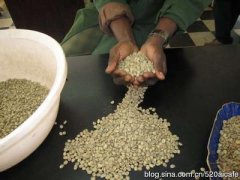
A brief introduction to the history and culture of the origin and development of fine Burundian coffee beans with excellent acidity
Burundi coffee was introduced by Belgian colonists in 1930. Unfortunately, many of these farms are on the border with war-torn Rwanda, putting pressure on coffee production. Coffee production in Burundi: Burundian coffee is now grown only on small farms. Almost all the coffee produced in Burundi is Arabian coffee beans.